NIFAAS Advocates Innovative Pathway for Agricultural Transformation in Nigeria
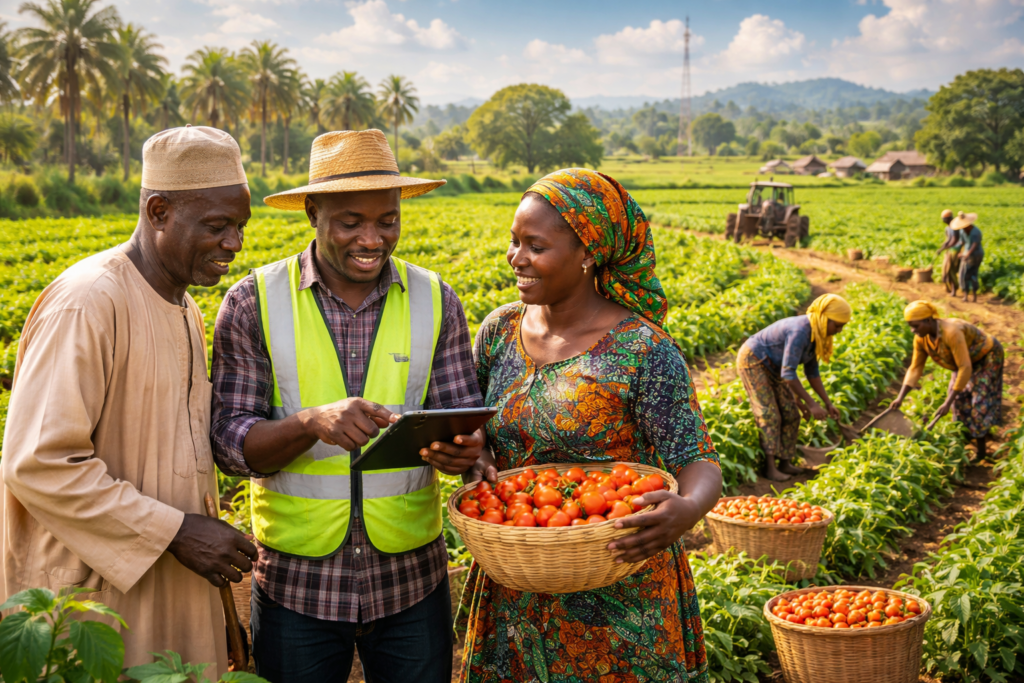
In the face of mounting threats to Nigeria’s agricultural sector, NIFAAS has called for a bold shift toward innovative, knowledge-driven pathways capable of transforming the nation’s food systems. Speaking at a recent stakeholders’ engagement of 12 March 2026, Dr. Godfrey Onagwa emphasized that Nigeria’s agricultural future depends not merely on policy pronouncements, but on building a dynamic, ICT-enabled advisory system that connects farmers to real-time knowledge, markets, and climate-smart solutions. According to him, “Nigeria’s agricultural challenge is not a lack of effort, but a failure to translate effort into coordinated, farmer-centered impact.”
Nigeria’s agriculture, long regarded as the backbone of rural livelihoods, is today confronted by a convergence of crises. Climate change remains one of the most devastating threats, with erratic rainfall, rising temperatures, and extreme weather events reducing crop yields and degrading farmlands. Studies show that these climatic disruptions have led to increased pest outbreaks, declining soil fertility, and reduced productivity across key staples such as maize, cassava, and rice. In recent years, floods have destroyed hundreds of thousands of hectares of farmland nationwide, while prolonged droughts in northern regions have intensified water scarcity, undermining food production and farmer resilience.
Beyond climate pressures, structural challenges continue to weaken Nigeria’s agricultural system. Smallholder farmers—who produce the bulk of the nation’s food—face limited access to extension services, modern technologies, credit facilities, and markets. Agricultural extension delivery, which should serve as the bridge between research and practice, has suffered decades of neglect, characterized by inadequate funding, weak coordination, and the absence of a coherent national policy framework. This has left millions of farmers without the knowledge or tools needed to adapt to changing environmental and economic realities.
Government and institutional efforts to revitalize agriculture have, over the years, yielded mixed results. Various initiatives—from large-scale irrigation projects to commodity-specific programmes such as cassava transformation schemes—have often failed to achieve lasting impact due to policy inconsistency, weak implementation, and lack of continuity. Analysts note that many interventions are not backed by strong legislative frameworks, making them vulnerable to abandonment with changes in administration. Similarly, climate-focused initiatives and donor-funded projects have struggled with poor inter-agency coordination and limited integration into national planning systems, thereby reducing their effectiveness.
Dr. Onagwa, who is NIFAAS CIKM, observed that a recurring weakness across these efforts is the failure to place farmers at the center of agricultural transformation. “Policies are often designed in isolation from the realities on the ground. Without a demand-driven advisory system, even the best innovations will not reach the farmers who need them most,” he noted. He further stressed that the disconnect between research institutions, extension services, and end-users has created a systemic gap that continues to undermine productivity and food security.
To address these challenges, NIFAAS is championing a new paradigm anchored on innovation, collaboration, and digital transformation. As Nigeria’s country forum under the African Forum for Agricultural Advisory Services (AFAAS), the organization is leveraging continental networks to promote best practices, strengthen capacity, and facilitate knowledge exchange. Central to this approach is the integration of ICT tools in agricultural advisory delivery, enabling farmers to access timely information on weather patterns, input use, pest control, and market opportunities. The CIKM outlined five key recommendations that, according to NIFAAS, are critical to repositioning Nigeria’s agricultural sector for sustainable growth:
1. Institutionalizing a National Agricultural Advisory Policy: Nigeria must develop and implement a comprehensive, well-funded agricultural advisory policy that clearly defines roles, strengthens coordination, and ensures accountability across all levels of government and stakeholders.
2. Leveraging Digital Technologies for Extension Delivery: The adoption of mobile platforms, data systems, and digital advisory tools should be prioritized to bridge the information gap between researchers and farmers, particularly in remote and underserved communities.
3. Strengthening Multi-Stakeholder Collaboration: Government, private sector actors, research institutions, and farmer organizations must work within a coordinated framework that promotes knowledge sharing, co-creation of solutions, and inclusive participation.
4. Investing in Capacity Building for Extension Personnel: A new generation of well-trained, adequately resourced extension agents is essential to delivering modern, climate-smart advisory services that meet the evolving needs of farmers.
5. Mainstreaming Climate-Smart Agriculture: Policies and programmes must integrate climate resilience as a core component, equipping farmers with adaptive strategies to cope with environmental shocks and sustain productivity.
According to the CIKM, these recommendations are not merely policy options but urgent imperatives. The organization argues that without a fundamental shift toward a more responsive and integrated advisory system, Nigeria risks deepening its food insecurity challenges, despite its vast agricultural potentil. Generally, experts agree that the path forward lies in rethinking how agricultural knowledge is generated, shared, and applied. Digital innovation, if effectively harnessed, could play a transformative role in connecting farmers to the resources they need, reducing inefficiencies, and enhancing productivity. However, success will depend on political will, sustained investment, and a commitment to long-term planning.
As Nigeria grapples with the realities of climate change, population growth, and economic pressures, the call by NIFAAS for innovative pathways offers a timely reminder that the future of agriculture depends not only on what is produced, but on how knowledge flows within the system. For Dr Onagwa and other agricultural knowledge managers in Africa, the message is clear: transforming agriculture in Nigeria requires more than ambition—it demands the coordination of knowledge and expertise, innovation, and a relentless focus on the farmer.


 Next Post